

Fixed Thinking Patterns: The Brain Science Behind Why They're So Hard to Ditch

Your brain is efficient. Annoyingly, impressively, sometimes infuriatingly efficient.
Your brain is obsessed - O.B.S.E.S.S.E.D - with patterns. It's a pattern-making machine. It thinks your survival depends on its ability to identify patterns because the more familiar it becomes with a pattern, the more confident it gets in making predictions. It takes every experience you have, every reaction that worked, every conclusion that kept you safe, and it files them as patterns. Then it runs those patterns automatically, so it doesn't have to burn energy figuring out the same situation twice. Cuz' it's also super cheap when it comes to energy use.
That's genuinely useful when the situation stays the same. It becomes a problem when the situation changes and the pattern doesn't.
What a Fixed Thinking Pattern Actually Is
A fixed thinking pattern runs on one core assumption: ability is assigned, not built. You're either good at something, or you aren't. Effort past a certain point is just uncomfortable confirmation of a limit that was always there.
That assumption drives everrrrrrrrrrrrything downstream. You skip challenges that might expose a gap. You quit when difficulty shows up because difficulty reads as evidence, not process. Feedback feels personal because, in a fixed framework, criticism isn't information; it's a ranking. Other people's wins feel threatening for exactly the same reason.
All of that is a pattern that got built through repetition and got reinforced every time the situation seemed to confirm it. Repetition built it, but a different repetition can rebuild it. What a relief, right!?
What an Adaptive Thinking Pattern Runs On
An adaptive thinking pattern runs on a different core assumption: ability gets developed through what you actually do. The brain changes based on what you practice, what you fail at, and what you try again after failing.
Carol Dweck's research showed that kids who understood this one basic fact — that the brain is changeable — performed better academically. They also recovered faster when things got stressful because they felt more confident. Because they had accurate information about how learning works, and, accurate information changes behavior in ways that inspiration doesn't. So, this is about having a more accurate operating model and letting your behavior follow from that.
Why Knowing This Doesn't Automatically Change Anything
You've probably heard some version of this before. You're still running the same patterns. That is just how pattern change actually works, and nobody explains it honestly.
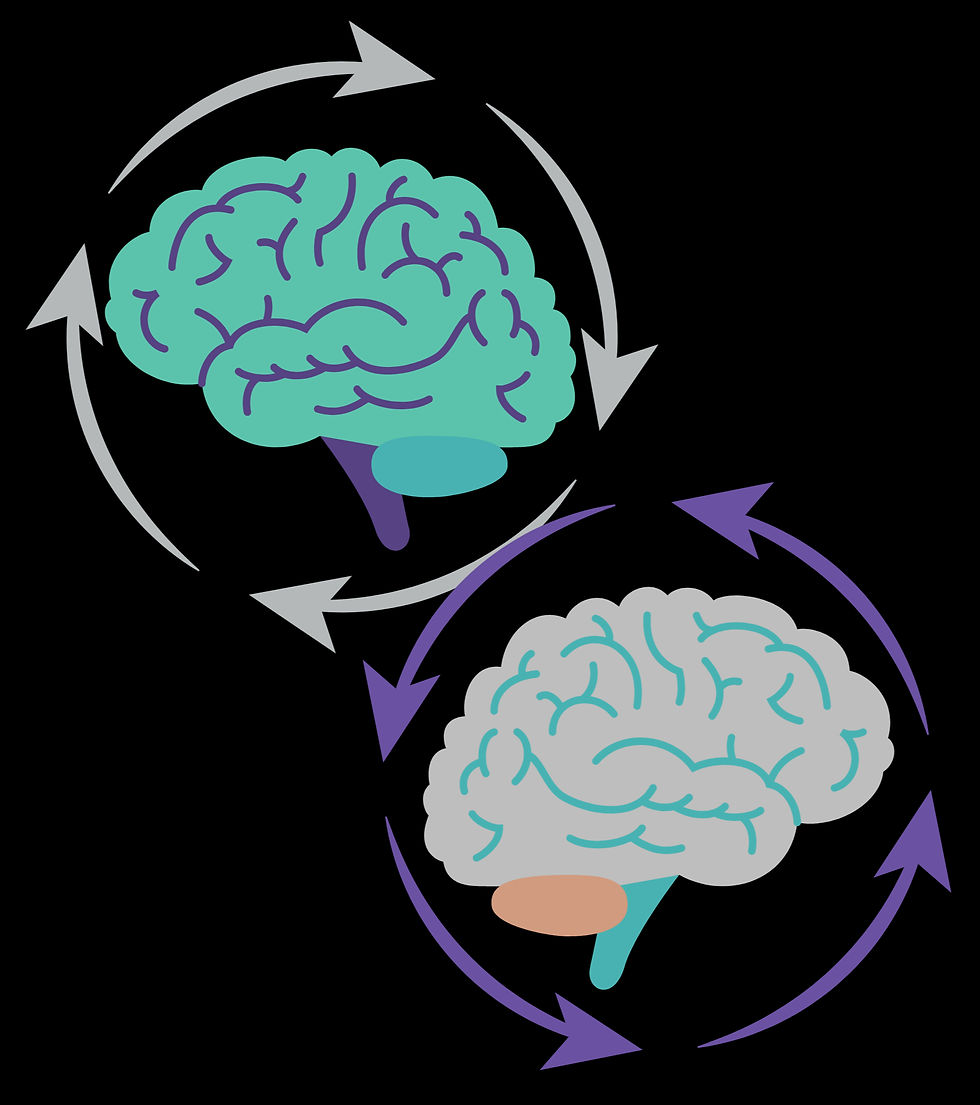
Fixed thinking patterns are fast, and they fire before you've consciously decided anything. Your nervous system reads a situation as familiar, matches it to an existing pattern, and reacts. Your conscious reasoning brain shows up after the fact and then tries to explain what just happened. Which means you can't think your way out of a fixed thinking pattern.
Insight doesn't update the pattern. Repeating different behavior updates the pattern. You do something differently enough times that your brain builds a new default, and the old one starts getting less use. The brain always takes the path of least resistance, so the more you use the new pattern, the easier the path will be to travel.
That's it. That's the whole mechanism. The whole kit and kaboodle.
What's Actually Running Underneath
Fixed thinking patterns sit on top of beliefs about what's possible, what's safe to try, and what failure means about you, specifically. Those beliefs were built from real experiences, usually (most likely) ones that had some emotional weight behind them.
That's your brain's attempt at being efficient (as demented as it appears). It did the bet it could with what it had at the time by taking the available evidence and drawing conclusions that made sense in that moment. The issue now, is that it keeps applying those conclusions to situations where the evidence has changed.
Recognizing which specific belief is driving the pattern matters more than recognizing the pattern itself. "I avoid challenges" is an observation. "I avoid challenges because I concluded a long time ago that trying and failing publicly means something permanent about my capability" is something you can actually work with.
The Bit About Other People
If watching someone else do well at something you want to do makes you feel worse about yourself, that's a fixed thinking pattern running. Somebody else's win reads as information about your rank rather than information about what's possible.
Worth noticing without judgment. You can't interrupt a pattern you haven't spotted yet, and spotting it is genuinely the first functional step.
How Long It Actually Takes
Fixed thinking patterns got reinforced over years, and your nervous system is committed to them. Changing them takes consistent interruption of the old pattern and consistent repetition of different behavior over time.
A lot of that interruption will happen after the fact. You'll catch yourself running the old pattern twenty minutes later instead of in real time. That still counts as interruption. The brain is tracking frequency, not perfect execution.
Exercise: Find Your Fixed Pattern and Locate the Belief Under It
Pick one area of your life where you consistently hold back, avoid, or bail early. Write it down in plain, specific language. Not "I struggle with confidence" — something like "I don't apply for things I actually want because I assume I won't get them."
Then work through these questions on paper:
What's the belief underneath that behavior? Write the actual thought your brain runs, not the cleaned-up version.
Where did that conclusion come from? You don't need to do a deep therapy excavation — just ask when you first remember running this particular assumption.
What would count as evidence that the belief isn't accurate? Be specific. Your brain has been selectively ignoring counter-evidence for a while. Name what it's been skipping.
What's one thing you've avoided because of this pattern that you could do this week in a low-stakes version?
Write the answers down. On paper, not on your phone. The act of writing moves the thought from the reactive part of your brain into the reasoning part, and that's where you can actually do something with it.
If you want more structured tools for pulling apart the patterns underneath your fixed thinking - especially the ones that cause major stress and anxiousness, the Oh Shit Tool Kit is free (and it's built for exactly this).
Get your free copy of the Oh Shit Tool Kit when you join the ShiftList!


Comments